

Principles versus propaganda
How we stay grounded despite chaos.

“It’s 2020 all over again.” I’ve seen this sentiment over and over again for days now, traveling in opposite directions. There are those who say it like it’s a good thing, cherishing the “reckoning” that took place back then and raring to revive it. And then there are those who say it with a palpable sense of exhaustion, irritated by yet another round of propaganda-induced chaos and volatility. I land somewhere just shy of the latter group.
Back in 2020, my algorithmic ghetto sat to the left of Black Square-stagram, where instead of shaming people for not posting the infamous black square, activists shamed people who did post it for being performative instead of being real accomplices to us downtrodden Negroes. (If you’re wondering why so many activists are “suddenly” willing to commit felonies on behalf of the latest victim class prioritized by Groupthink, Inc., that willingness has actually been carefully cultivated for years now.)
Six years later, however, things look different for me. Not necessarily on my LinkedIn feed, where the steadily shrinking but still-majority of my connections date back to my old life. But my Instagram feed, while peppered with some of the hysterics and hyperbole Meghan Murphy and other rational women are lamenting, also features a refreshing number of people who are vocally refusing to play their prescribed roles in this season’s political theater production.
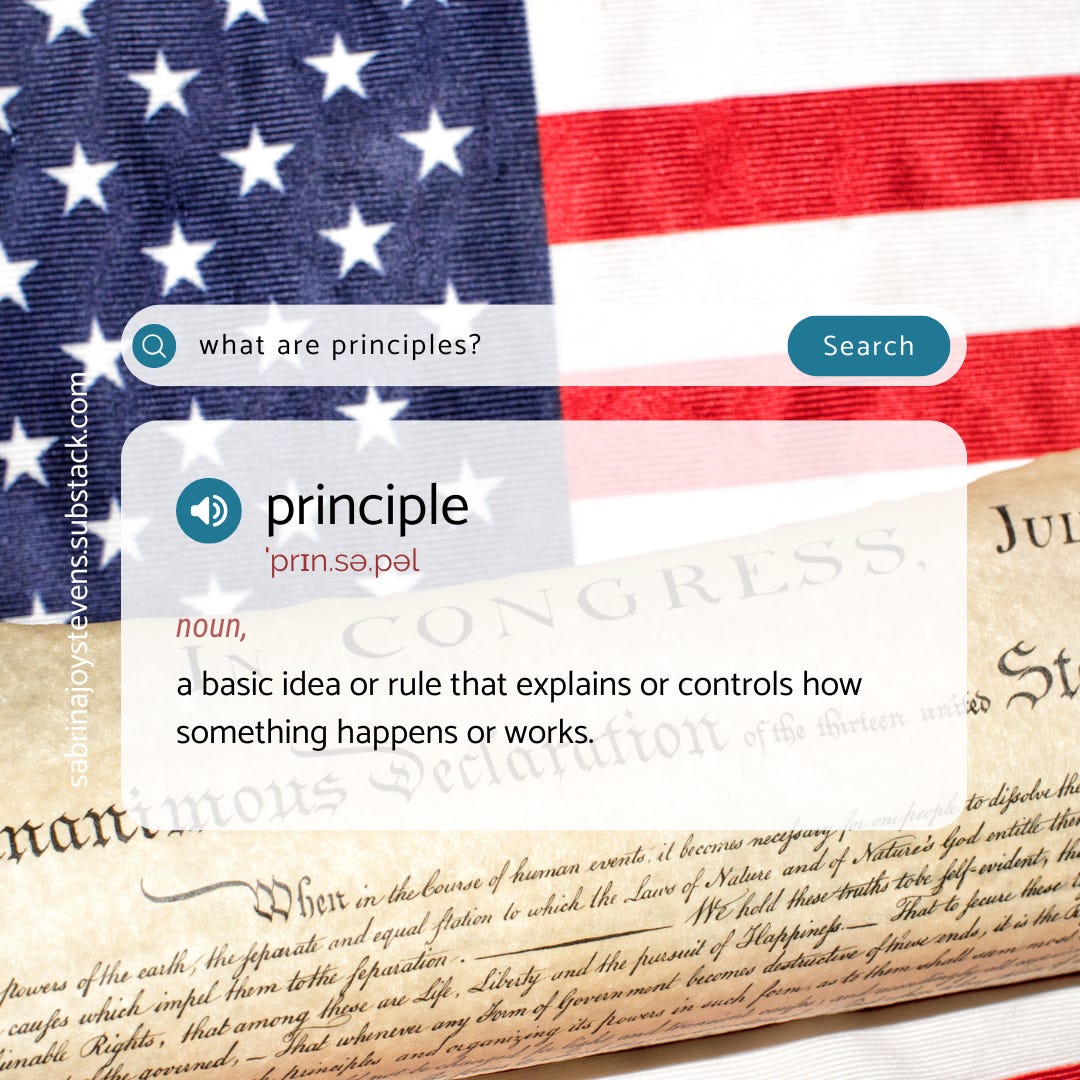
What distinguishes the people rejecting demands to stick to partisan scripts from the people making those demands are sound principles, and strong boundaries to defend them. Anchoring ourselves in sound, time-tested principles is one of our best defenses against political manipulation. When we approach life in an intentional, principled way, our principles become the filter through which we interpret information and make decisions, instead of our emotional reactivity to well-presented sob stories, deceptive optics, or tribal peer pressure. Sound principles allow us to keep our feelings in check instead of letting them govern our choices — which, in practice, usually means letting whomever best appeals to said feelings govern our choices. This is crucial in all aspects of life. But it’s especially important in the political arena, where there are countless people attempting to manipulate us into putting our votes, our money, even our bodies and lives on the line for their agendas.
People I know in other countries (and some who live here but don’t normally pay attention to politics) keep asking me how I feel about “what’s happening in America right now.” The smart aleck in me wants to respond that America is a huge country, and there are way too many things happening here for me to possibly know, think, or feel anything about all of it. But I know what they’re really asking: what do I think about the clashes over immigration enforcement happening in Minnesota?
To that, I’d say I’m grieved when anyone dies of unnatural causes. I want law enforcement held accountable for irresponsible uses of force, and want competent federal leadership more generally. I also believe in our fundamental rights to free expression and self-defense, including responsible gun ownership. Yet I also recognize that all of those rights can only be consistently upheld in an orderly, lawful system, and I recognize the difference between free expression and hostile aggression that intrudes upon other people’s rights and threatens personal and public safety. Directly interfering with lawful enforcement operations is not protest, it is an aggressive attempt to undermine the will of the people in the streets because their de facto open borders policy lost at the ballot box. That is not what democracy looks like — it’s what foolishness looks like, and I wholeheartedly reject Democrats’ efforts to exploit misguided activists’ deaths to manipulate voters out of supporting much-needed immigration enforcement. I also reject the deceptive, inflammatory rhetoric that encourages activists to fling themselves into high-risk situations, making them even more dangerous for everyone involved.
Stochastic martyrdom on the left and reflexive defenses of unjust force on the right are what happens when people are driven by emotions and tribalism instead of sound principles. People become unmoored from reality when they root their actions and identities in opposing whatever their perceived enemies oppose, instead of what actually makes sense.
Less obvious, though, is a related risk for those of us in the vast terrain between those extremes: compromising with foolishness just to alleviate our discomfort. But the halfway point between left wing crazy and right wing crazy is just another kind of crazy— the kind that drives “reasonable” people to let our squeamishness with conflict short-circuit our reasoning, thereby letting irrational people set the terms of every policy debate. The middle ground fallacy is a horrible substitute for looking beyond the false choices presented by emotionalists and extremists, staking out principled stances, and exerting positive political pressure.
I don’t see this political crazy train stopping anytime soon, but that doesn’t mean we have to ride. If you haven’t already, now is the time to get clear on your fundamental principles so you can protect yourself from propaganda, emotional manipulation, and groupthink. Though we have differing perspectives that will lead us to different policy preferences and approaches, our founding commitments to humans’ inalienable rights to life, liberty, and property are an important source of common ground. Here’s hoping we keep those top of mind.
Here’s also hoping that no matter where you come down on ~all of this~, that you stay connected to people who know and care about you, and prioritize them over the opinions of strangers — or even fair weather friends and family — who will use and discard you at will whenever it suits their egos or The Cause™. Please don’t let your inner or outer critics pressure you into thinking that you’re responsible for watching and analyzing every gory video, or instantly performing the correct response to every breaking news item or trending topic, or unworthy of sharing opinions that don’t exactly mirror the dominant voices on your timeline.
Remember, too, that having principles in a toxic political culture means you will often end up choosing between Bad and Worse during election seasons. As Chad O. Jackson recently said, “If we want to tell the truth about history, we have to be confronted with the fact that many times, there are no ‘good guys.’” The ways we engage in public life beyond the ballot box can help shift political incentives and change our political culture over time, but that’s a years-long (if not generational) project at best. In the interim, making the most of the options in front of us is the best we can do, and we don’t need to feel guilty or anxious about that. Partisan ideologues who refuse to recognize the depth of their “side’s” shortcomings will invariably try to shame us for not conforming to their tribal dictates. But we do not need to defend ourselves to people who refuse to think for themselves or fairly consider others’ viewpoints.
Finally, if you’re like many of us who’ve lost friends and family to Groupthink, Inc.’s divisive ethos, prioritize building community with others who recognize this situation for what it is. Cultivating camaraderie and support helps us stick to our principles despite hardened partisans’ unfair accusations; it’s easier to deal with their scorn when we have other people with whom we can commiserate and/or enjoy ourselves. Life is so much bigger than the story of the day, however tragic. You have more power and influence in your home and community than you do over what is happening to people you don’t know in places you don’t live. Maximizing that power and influence is the most solid platform you can build for yourself to influence anything else, and it’s critical for weathering the inevitable storms and crises we all face. It’s a lot more satisfying, too.
Free yourself from groupthink by looking at news from sources you otherwise would’ve missed. Check your blindspots with Ground News. Subscribe through my link for 40% off their all-access Vantage plan (the plan I’ve used since well before becoming an affiliate), or 15% off all others. Your subscription not only helps support my work, it also helps Ground News as they make the news media landscape more transparent. Thanks!